Mission Statement

The shrine of
Saint Sharbel
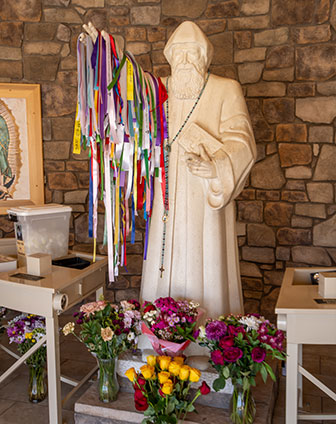
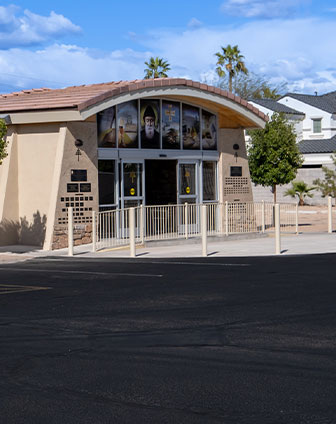
The Shrine of St. Sharbel was dedicated on March 26, 2017, by His Excellency A. Elias Zaidan, Bishop of the Eparchy of Our Lady of Lebanon of Los Angeles. This sacred place came to life through the generous support of donors and parishioners. The Shrine is open to all who come to pray, reflect, and reconnect with God. the Shrine of St. Sharbel is a pilgrimage destination, a spiritual landmark, and a source of pride for the City of Phoenix. It remains open year-round, 24 hours a day, seven days a week. We warmly welcome your visit.

A Life of Prayer and Holiness

The Life of
Saint Sharbel

Discover the remarkable journey of St. Sharbel—a humble monk from Lebanon whose deep faith, devotion, and miracles continue to inspire people around the world. His life of prayer, sacrifice, and holiness left a legacy that draws countless faithful to seek his intercession today.
  • Born Yousef Antoun Makhlouf on May 8, 1828, in Bkaakafra, North Lebanon.

  • Raised in a devout Maronite Catholic family.

  • Known for his deep faith and devotion from a young age—often called “the saint” by locals.

  • Inspired by the hermits of the Monastery of St. Anthony-Kozhaya.

  • Spent time praying in solitude at a grotto dedicated to the Virgin Mary.

  • Joined the Lebanese Maronite Order in 1851, taking the name Sharbel.

  • Professed vows of poverty, chastity, and obedience in 1853.

  • Ordained a priest on July 23, 1859, after theological studies under St. Nimatullah Hardini.

  • Lived 16 years as a monk at St. Maron Monastery in Annaya.

  • In 1875, began hermit life at the Hermitage of Sts. Peter and Paul.

  • The “Miracle of the Lamp” confirmed his divine calling to hermitage.

  • Passed away on Christmas Eve, December 24, 1898.

  • A mysterious light shone from his tomb; his body was later found incorrupt.

  • Countless healings and miracles began and continue through his intercession.

  • Beatified by Pope Paul VI in 1965 at the close of Vatican II.

  • Canonized by the same pope on October 9, 1977.

  • Today, St. Sharbel is known and venerated around the world for miraculous healings and powerful intercession.

The Healing Holy Oil of St. Sharbel reputation
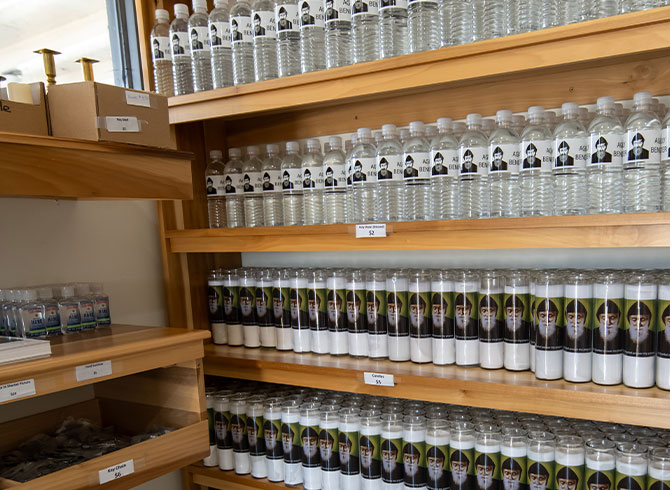
The Holy Oil of St. Sharbel is a blessed oil by the Bishop or the priest applied to the forehead of the person with faith and believe in our Lord Jesus Christ.

If you use a cotton ball, please burn it after use, never discard it in the trash. The Healing Oil is available for a suggested donation of $20.00 and includes:

  • One 1/4 oz bottle of Holy Oil
  • One prayer cards of St. Sharbel
  • A complimentary gift from the church.

(Shipping available only within the USA.)

sight to the blind

A Miracle of Faith at St. Joseph Church:
Dafne’s Healing Through St. Sharbel

On January 18, 2016, in Phoenix, Arizona, Dafne Gutierrez, a blind Hispanic mother of four, experienced a miraculous restoration of her vision through the intercession of St. Sharbel. Diagnosed in 2013 with Idiopathic Intracranial Hypertension, Dafne’s vision had deteriorated despite aggressive medical and surgical treatments, leaving her completely blind. Doctors had no further options and even suggested nursing home care. Desperate, Dafne came to St. Joseph Maronite Catholic Church—not knowing the Maronite Rite or St. Sharbel—and prayed with faith before St. Sharbel’s relics. After confession and being blessed with Holy Oil by Fr. Wissam Akiki, the parish pastor, her vision was fully restored within four days, confirmed by normal eye exams. A medical review led by many doctors and one of them is Dr. Anne Borik concluded there is no scientific explanation for Dafne’s sudden recovery, affirming it as a miraculous healing through St. Sharbel’s intercession. Fr. Wissam continues to minister to those seeking healing, recalling his hopeful words to Dafne’s children, “Your mom will be able to see you again. Just have faith!” Over a month later, Dafne’s vision remains perfect.

SHRINE